
Yoga Nidra: The Subconscious Mind, Deep Rest & Inner Change
Oct 08, 2026Yoga Nidra is so much more than relaxation. It’s a guided meditation that brings the body into a state of deep rest while keeping a thread of awareness present.
Often called yogic sleep, it offers a unique opportunity to work with the mind beneath our everyday thoughts, including the subconscious patterns, beliefs, and emotional responses that influence how we experience life.
For women in all stages of life, Yoga Nidra can be a beautiful way to make space for rest and reconnection.
What Makes Yoga Nidra So Powerful?
1. It Works Beyond the Thinking Mind
During our waking hours, the conscious mind is busy analysing, planning, worrying, problem-solving, and responding to the world around us. Yoga Nidra gradually guides us away from this constant mental activity and into a deeply relaxed, inwardly focused state. We are no longer engaging with every thought in the same way, which can make it easier to observe habitual patterns without immediately reacting to them. The subconscious mind is often used as an umbrella term for the automatic beliefs, memories, associations, and habits that shape our behaviour. Yoga Nidra doesn’t magically bypass or erase these patterns, but it can create space to recognise them and practise new responses.
2. It Creates Space for Intention and New Beliefs
One of the traditional practices within Yoga Nidra is Sankalpa, a heartfelt intention or resolve. Rather than setting a goal from a place of pressure, you choose a simple, meaningful statement that reflects the way you want to live or the qualities you want to cultivate.
Examples of Sankalpa: • I am safe to rest. • I trust my body’s wisdom. • I am worthy of receiving support. • I meet myself with compassion. • I am grounded, capable, and enough.
When the body is deeply relaxed and the mind is less occupied with distractions, an intention can become a focus for reflection and repeated mental rehearsal. Over time, this may support changes in perspective, emotional responses, and habits. The magic isn’t that a phrase instantly rewrites your subconscious. It’s that a calm, receptive state gives you room to practise a different relationship with yourself.
3. It Helps the Nervous System Shift Out of Constant Alert
When we spend our days rushing, caring for others, worrying, or juggling responsibilities, the body can become accustomed to being on high alert. Yoga Nidra offers a structured period of stillness, attention, and guided relaxation. It can support the body’s relaxation response, helping some people feel calmer and less overwhelmed. Research is encouraging: studies and reviews suggest potential benefits for stress, anxiety, and mood, although differences in study quality and methods mean that more high-quality research is needed. The deeper significance is that when we feel calmer, we may have more capacity to respond intentionally instead of automatically repeating familiar stress responses.
4. It Can Help Us Reconnect with Emotions and Inner Patterns
Sometimes, when we finally become still, we notice things we haven’t had the space to acknowledge: sadness, frustration, exhaustion, fear, or simply how much we have been carrying. Yoga Nidra can provide a gentle setting in which to notice these experiences without immediately trying to fix them. With regular practice, this awareness may help us recognise emotional triggers and respond with greater compassion. It isn’t about forcing emotions away or uncovering hidden memories; it’s about developing a different relationship with what arises.
5. It Supports Rest Without Requiring You to Fall Asleep
One of the beautiful aspects of Yoga Nidra is that you don’t have to perform, stretch, concentrate perfectly, or even stay awake throughout the entire practice. You lie down, get comfortable, and follow a guided experience. Some people drift into sleep, while others remain aware in a deeply relaxed state. Research suggests Yoga Nidra may improve perceived sleep quality, although evidence that it consistently replaces lost sleep or produces specific amounts of restorative sleep remains limited. The benefits are so powerful that one hour of Yoga Nidra equals four hours of sleep. This isn’t an established scientific equivalence. Its value is that it offers a different form of deep rest, not that it replaces the biological functions of sleep.
What Happens in the Subconscious During Yoga Nidra?
Think about how many beliefs we carry without consciously choosing them: • “I have to do everything myself.” • “Rest is something I earn.” • “I need to keep everyone happy.” • “My needs can wait.” • “If I slow down, I’ll fall behind.”
These patterns can influence our decisions, relationships, stress responses, and even our ability to rest. Yoga Nidra creates an opportunity to pause those familiar loops. Through body awareness, breath, imagery, and intention, we can practise paying attention to new possibilities. Over time, repeated practice may help reinforce healthier habits and beliefs. This is best understood as a process of awareness, learning, and repetition rather than a guaranteed subconscious reprogramming technique.
How to Deepen the Experience
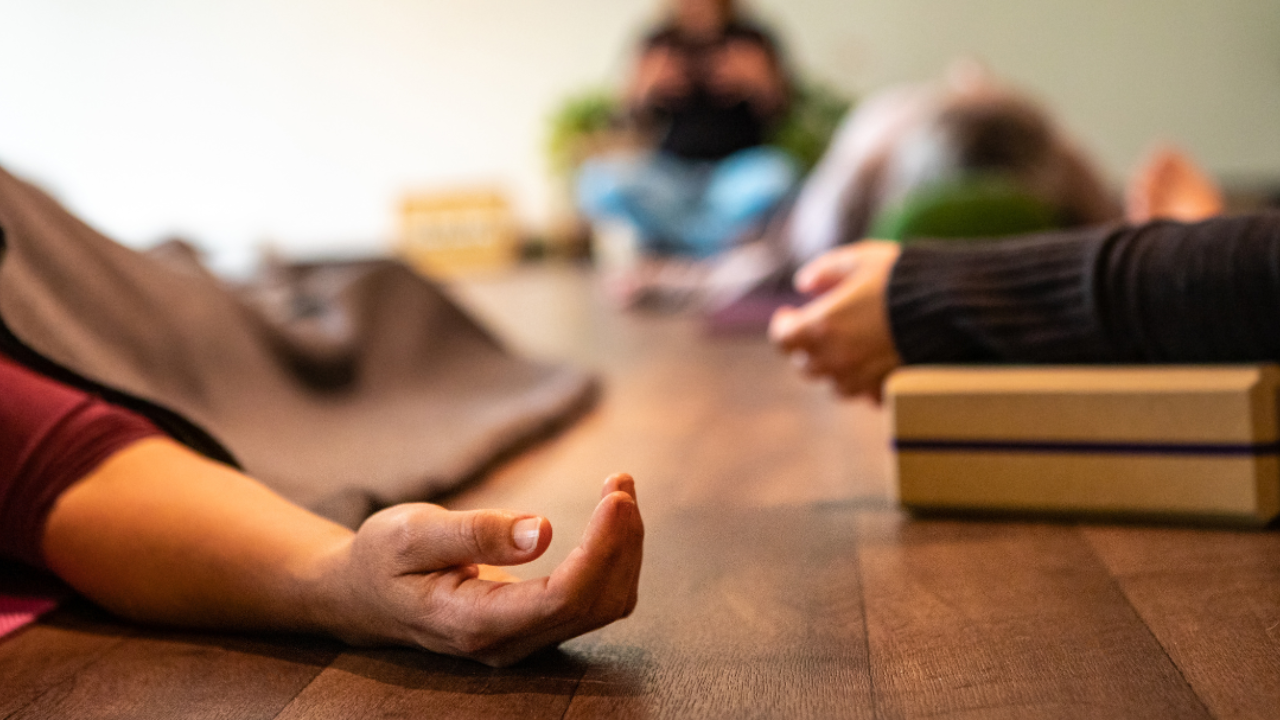
1. Prepare the body. Lie down somewhere warm and quiet. Use a blanket, bolster, or pillow so your body doesn’t have to work to remain comfortable.
2. Bring awareness inward. Follow the breath and the guided rotation of awareness through the body. Allow thoughts to come and go without needing to chase them.
3. Introduce a Sankalpa. Choose one short intention that feels meaningful. Repeat it gently at the beginning and end of the practice, without forcing yourself to believe something that doesn’t yet feel true.
4. Practise consistently. Even 10–20 minutes can become a meaningful ritual. Regular practice gives you repeated opportunities to settle, observe your patterns, and cultivate a calmer response.
Yoga Nidra isn’t about becoming a different person. It’s about creating enough stillness to notice the patterns that no longer serve you and practising a gentler, more intentional way of being. You spend so much of your waking life responding to the outside world. Yoga Nidra gives you time to turn inward. And sometimes, that is where the most meaningful changes begin.
Rest is not just recovery; it’s an opportunity to reconnect with yourself. For the exhausted woman, the mother who is always needed, and the person who knows she needs rest but struggles to slow down, Yoga Nidra can be an invitation to pause, soften, and begin again.
xoxo
Kristin
Don't miss a beat!
Nurturing movement, helpful resources, and updates designed to support every stage of your journey — from bump to baby and beyond.
We hate SPAM. We will never sell your information, for any reason.