
Pregnancy & the Pelvic Floor: Learning to Soften, Move & Breathe
Oct 09, 2026Pregnancy is a time to build a relationship with your body, not just to prepare it for birth physically, but to learn how to work with it.
When we talk about the pelvic floor during pregnancy, the conversation often focuses on strengthening. While pelvic floor strength is important, the ability to relax, lengthen and coordinate these muscles is just as valuable.
During labour, the pelvic floor needs to accommodate the descent of your baby. Your breath, diaphragm, pelvis and surrounding muscles all play a role in creating space, managing pressure and supporting your body's natural movements.
The goal isn't to keep your pelvic floor constantly relaxed or to force it to stretch. It's to develop awareness, mobility and the ability to soften when needed.
Think of pregnancy as an opportunity to practise the movements, breathing patterns and body awareness that may support you during labour.
1. The Pelvic Floor: Strength Is Only Half the Story
Your pelvic floor is a group of muscles that form a supportive hammock at the base of your pelvis. These muscles help support your pelvic organs, contribute to bladder and bowel control, and work with your deep abdominal muscles and diaphragm to manage pressure.
During pregnancy, these muscles are adapting to the growing weight of your baby, changes in posture and increased demands on your body.
A healthy pelvic floor needs to do two things:
- Contract: engage and provide support when needed.
- Relax and lengthen: release tension and accommodate changes in pressure and movement.
During vaginal birth, the pelvic floor muscles need to lengthen around your baby's descending head. If you habitually hold tension in your pelvic floor, learning to recognise and release that tension may be particularly helpful.
This doesn't mean every tight pelvic floor causes birth difficulties, or that relaxation alone determines your birth experience. Birth is influenced by many factors. However, learning to notice tension and practise releasing it gives you another useful skill to draw upon.
Try this simple awareness exercise:
Sit comfortably or lie on your side. Take a slow breath in and imagine the space between your sit bones, pubic bone and tailbone gently widening. Allow your jaw, glutes and inner thighs to soften.
You don't need to push down or bear down. Simply notice whether you can release unnecessary tension.
2. Your Breath & Pelvic Floor Work Together
Your diaphragm and pelvic floor work together as part of your body's pressure-management system.
When you inhale, your diaphragm descends and the pelvic floor generally responds by gently lengthening. As you exhale, the diaphragm rises and the pelvic floor may recoil naturally.
This relationship is one reason breathing can be such a valuable tool during pregnancy.
Practise 360-degree diaphragmatic breathing
Find a comfortable seated, side-lying or hands-and-knees position.
- Place your hands around the sides of your lower ribs.
- Inhale gently through your nose, allowing your ribs to expand in all directions — forward, sideways and into your back.
- Imagine your pelvic floor softening and widening as you breathe in.
- Exhale slowly, allowing your ribs to settle without forcefully sucking in your stomach or squeezing your pelvic floor.
- Repeat for five to ten comfortable breaths.
The aim is to create a sense of expansion through the rib cage and a gentle response through the pelvic floor.
Avoid forcing a deep breath, pushing downward or holding your breath. If you experience pelvic heaviness, pressure or discomfort, make the breath smaller and more comfortable.
Why practise this during pregnancy?
Breath awareness can help you recognise when you are holding tension, improve coordination between your diaphragm and pelvic floor, and give you a familiar rhythm to return to during contractions.
During labour, you might use a slow, steady breath to stay grounded through a contraction and consciously soften your jaw, shoulders, glutes and pelvic floor.
You don't need to breathe perfectly during labour. This is about developing a skill you can return to when it feels helpful.
3. Move Your Pelvis: Practise the Movements You May Use in Labour
Your pelvis is not a rigid structure. The joints and surrounding tissues adapt throughout pregnancy, and your pelvic position changes with movement.
Changing positions can influence your comfort, the way you experience pressure and how your baby relates to your pelvis. During labour, many people naturally find themselves rocking, swaying, leaning forward or moving their hips.
Moving your pelvis during pregnancy gives you an opportunity to explore movement before you need it during labour.
There is no single perfect birth position. The goal is to discover what feels comfortable and intuitive for your body.
Cat–Cow
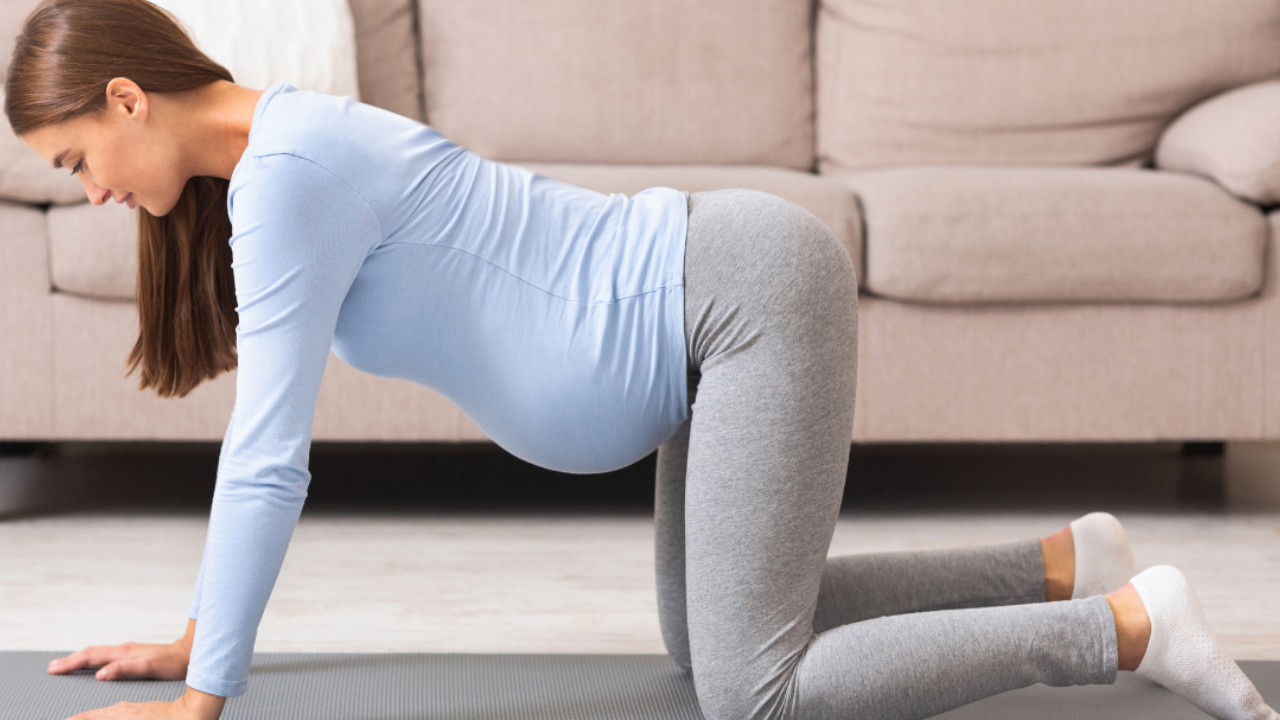
Start on your hands and knees, with your hands beneath your shoulders and knees beneath your hips.
- Inhale as you gently tilt your pelvis forward, allowing your belly to soften and your chest to broaden.
- Exhale as you gently tuck your tailbone and round your spine.
- Move slowly between the two positions, following your breath.
Keep the movement comfortable rather than forcing an exaggerated arch or rounding your back.
Why it helps: Cat–Cow encourages spinal and pelvic mobility, gives you an opportunity to practise coordinating breath with movement, and may ease feelings of stiffness through the back.
Pelvic Tilts & Hip Swings
You can practise standing, on hands and knees, or leaning forward over a stable surface.
Gently tilt your pelvis forward and backward. Then explore side-to-side shifts, small circles and slow figure-eight movements.
Let the movement become fluid rather than trying to hold your pelvis in one fixed position.
Why it helps: These movements encourage awareness of your pelvic position, offer gentle mobility through the hips and lower back, and help you discover positions that feel soothing.
Salsa-Inspired Hip Sways
Put on a favourite song and allow your hips to move.
Shift your weight from one foot to the other. Add gentle circles, figure eights or a small side-to-side sway. You can also lean forward onto a counter or exercise ball if that feels more comfortable.
There is no choreography to learn. Think of it as dancing with your pelvis rather than exercising it.
Why it helps: Rhythmic movement encourages you to explore different pelvic positions, release unnecessary muscular tension and become more comfortable moving instinctively.
These are the kinds of movements you may also choose to explore during labour, particularly when standing, leaning forward or remaining upright feels comfortable.
4. Rock Backs: Creating Space Through the Hips
Rock backs are a gentle way to explore hip movement while supporting your body on your hands and knees.
Begin on all fours. Keep your spine comfortable and neutral, then slowly shift your hips backward toward your heels. Stop before you feel pinching, pressure or discomfort. Return to your starting position and repeat.
You can widen your knees slightly if that feels comfortable, keeping your feet relaxed behind you.
Breathe naturally throughout the movement. As you rock back, imagine your sit bones gently widening rather than gripping through your pelvic floor.
Why it helps: Rock backs encourage hip mobility, provide a gentle change in pelvic position and may help relieve tension through the hips and lower back.
This position can also be a comfortable way to rest during pregnancy or between contractions in labour.
You do not need to push your hips all the way to your heels. Your growing belly, joint comfort and individual anatomy will determine your range of movement.
5. Adductor Stretches: Caring for the Inner Thighs
Your adductors are the muscles along the inner thighs that help bring your legs toward the midline of your body. They work closely with other muscles around the pelvis and hips.
Gentle inner-thigh movement can be a useful addition to your pregnancy mobility routine.
Supported Butterfly Stretch
Sit on a cushion with the soles of your feet together and your knees falling outward. Support your thighs with pillows or yoga blocks if needed.
Sit tall, breathe comfortably and allow your inner thighs to soften. There is no need to push your knees toward the floor.
Supported Wide-Knee Position
From hands and knees, slowly widen your knees only as far as feels comfortable. Keep your hips supported and avoid sinking into a deep stretch. You can also place cushions beneath your knees for comfort.
Breathe into the sides and back of your rib cage and allow your pelvic floor to remain soft without pushing downward.
Why it helps: Gentle adductor mobility can improve comfort through the inner thighs and hips and help you explore different leg positions.
The goal is not to force your pelvis open or stretch as deeply as possible. Pregnancy hormones can increase joint mobility, so gentle, controlled movement is preferable to aggressive stretching.
6. Thoracic Mobility: Don't Forget Your Upper Back
When we think about preparing the pelvis for birth, it's easy to forget the upper body.
Your thoracic spine is the middle portion of your spine, where your ribs attach. Mobility through this area helps you move your rib cage, breathe comfortably and explore different positions without relying entirely on your lower back.
Because your rib cage and diaphragm are closely connected, upper-body movement can complement your breathing practice.
Supine Thoracic Rotation
Lie on your side with your knees comfortably bent and supported by a pillow if needed. Reach both arms forward, then slowly sweep your top arm across your body and open it toward the opposite side.
Rotate only as far as comfortable, allowing your upper back and chest to follow. Return to the starting position and repeat.
Thread the Needle
From hands and knees, slide one arm beneath your opposite arm, rotating gently through your upper back. Return to the starting position and repeat on the other side.
Keep the movement small and comfortable, and avoid positions that compress your belly.
Seated Rib-Cage Rotations
Sit comfortably on a chair or cushion. Place your hands across your chest and gently rotate your rib cage to one side, return to centre, then rotate to the other side.
Keep your pelvis relatively steady while your upper body moves.
Why it helps: Thoracic mobility encourages comfortable rotation through the upper back, supports rib-cage movement and gives you more options for changing position during pregnancy and labour.
7. Putting It All Together: A Gentle Daily Practice
You don't need a long or complicated routine. Five to ten minutes of mindful movement can be a useful starting point.
Try this simple sequence:
- 360 breathing: Take five to ten relaxed breaths, allowing your rib cage to expand in all directions.
- Cat–Cow: Move slowly for six to eight repetitions, following your breath.
- Pelvic circles or hip sways: Explore gentle circles, side-to-side movement and figure eights for one to two minutes.
- Rock backs: Complete six to eight comfortable repetitions.
- Supported adductor stretch: Spend a few relaxed breaths in a position that feels good for your inner thighs.
- Thoracic rotations: Perform four to six gentle rotations on each side.
- Finish with stillness: Pause and notice whether your jaw, shoulders, glutes and pelvic floor feel softer.
Adjust the sequence to suit your body. You can leave out any movement that creates discomfort, pelvic pressure, dizziness or pain.
8. Taking These Skills Into Labour
The movements you practise during pregnancy are not a formula for a particular birth outcome. Instead, they help you become more familiar with your body and the options available to you.
During labour, you might find comfort in:
- Rocking your hips through contractions.
- Leaning forward over a birth ball, bed or supportive partner.
- Moving between hands-and-knees and upright positions.
- Using slow breathing to stay connected to your body.
- Relaxing your jaw, shoulders, hands and glutes when you notice tension.
- Changing positions when something no longer feels comfortable.
Your body may want to move in ways you haven't practised, and that is okay. You can follow what feels supportive while working with your birth team and your baby's needs.
Remember that pelvic floor relaxation is not the same as actively pushing down. You do not need to bear down during pregnancy to prepare for birth.
If you have been advised to modify activity, have a high-risk pregnancy, or experience bleeding, fluid leakage, painful contractions, dizziness, or persistent pelvic pain or pressure, seek guidance from your maternity care provider before continuing.
A Final Thought
Preparing your pelvic floor for birth is not only about building strength. It's also about learning to breathe, move, recognise tension and find positions that help you feel comfortable.
Your pelvis does not need to be forced open. Your pelvic floor does not need to be held tight all day. And you do not need to master every movement before labour begins.
Start with your breath. Explore gentle movement. Notice where you hold tension, and practise softening without forcing.
Movement in pregnancy is an opportunity to build familiarity with your body so when labour comes, you have more ways to move, breathe and respond to what you need in the moment. Xoxo Kristin
Don't miss a beat!
Nurturing movement, helpful resources, and updates designed to support every stage of your journey — from bump to baby and beyond.
We hate SPAM. We will never sell your information, for any reason.